
Hypertension in Veterans: The Silent Wound of Service

9-06-2025
By Dr. Howard Friedman MD | Veteran | U.S. Army Medical Corps | Internal Medicine | HHOM LLC
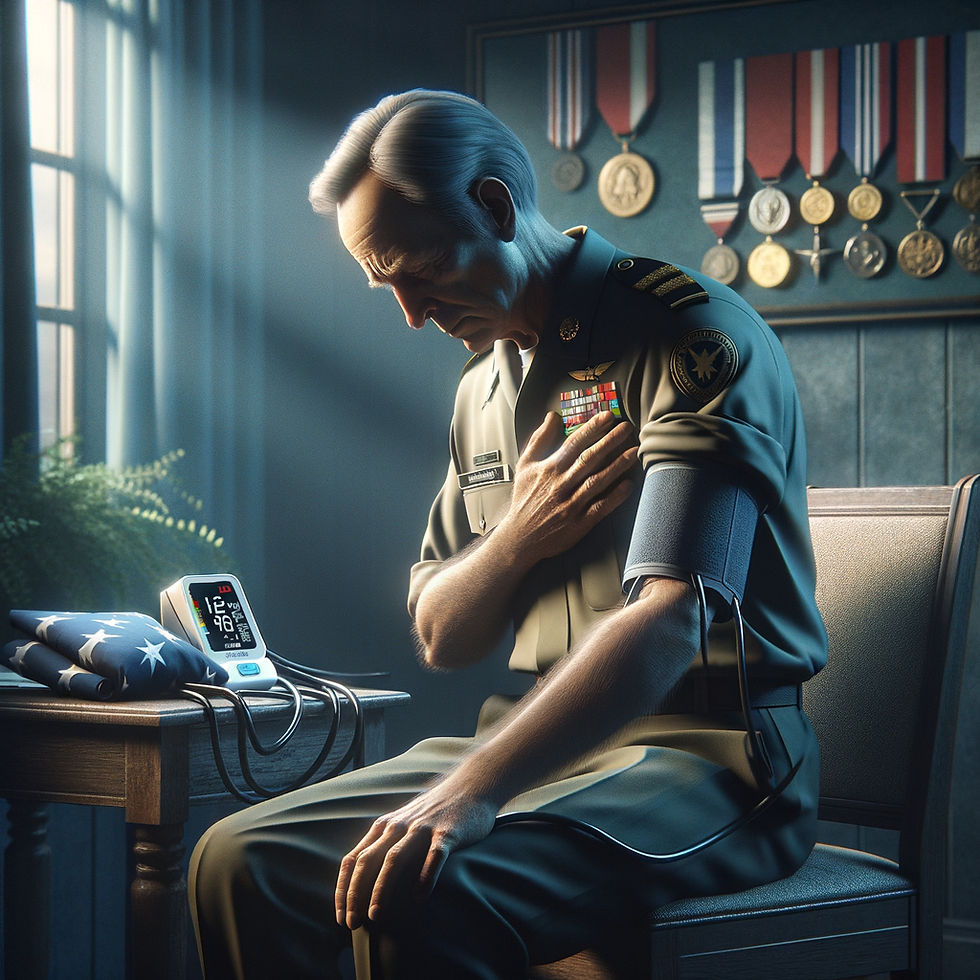
No blast, no scar, no battle cry,
Yet numbers climb, years go by.
A pressure silent, unseen, untold,
A service wound the cuff will hold. -
----Dr. Howard Friedman M.D.
Thesis: Hypertension may not be dramatic, but it is deadly. Many veterans underestimate its service connection, especially when it develops after exposure, stress, or as a secondary condition. This blog examines the medical science, VA regulations, and why veterans must not ignore “the silent wound.”
Introduction
Blood pressure is the rhythm of life—every beat sending a surge of blood into the arteries, followed by the vessel walls relaxing until the next wave comes. The top number, systolic, is that force of contraction; the bottom number, diastolic, reflects how well the arteries relax in between. Healthy arteries are supple, able to expand and recoil. But under years of strain, those same vessels stiffen, crack, and scar. That silent damage is what makes hypertension so dangerous: no warning signs, no obvious wound, until stroke, kidney disease, or heart failure appear.
For veterans, the risks are compounded. Stress, sleep deprivation, combat intensity, and environmental exposures all drive up internal pressure. Inflammation acts like a hidden accelerant, keeping the body on edge. What starts as a temporary rise during service may persist long after, tightening its grip with age. Hypertension doesn’t come with a battle cry—but for many who served, it is a wound carried home.
The Physiology – How Pressure Becomes Damage
Hypertension is rarely felt in the moment. Unless the numbers spike into a crisis, you don’t notice it. That’s the danger: silent, steady pressure wears down the body over years. Chronic elevations transform healthy, pliable arteries into rigid pipes. That stiffness robs organs of oxygen-rich blood. The heart strains against the resistance, its muscle walls thicken, and over time pumping weakens—leading to heart failure. The kidneys, central to filtering blood and regulating pressure, become both victim and accomplice: damaged by high pressure, yet driving it higher through disrupted regulation.
The brain, too, suffers. Reduced blood flow and fragile vessels increase the risk of strokes and subtle cognitive decline. No organ is spared. Hypertension doesn’t only restrict flow—it also fuels internal fire. The stress response, governed by the hypothalamus, pituitary, and adrenal glands (the HPA axis), pours out cortisol and epinephrine. These chemicals raise inflammation across the body. When they remain chronically elevated, inflammation and pressure lock together in a destructive cycle, damaging tissues silently, relentlessly.
Clinical Note – What Veterans Should Watch For
The trap with hypertension is its silence. Most veterans don’t feel a thing until complications appear—chest pain, shortness of breath, kidney trouble, or a stroke that strikes without warning. By then, the damage has already taken root.
Blood pressure is usually caught on routine checks, not because you noticed a symptom. That’s why ignoring or skipping follow-up readings is risky. A cuff number that looks “a little high” one year can turn into permanent vessel damage the next.
For veterans, the risk profile is heavier. Years of interrupted sleep, combat stress, toxic exposures, chronic pain, and conditions like PTSD all drive pressure higher. Secondary links are common: hypertension tied to diabetes, kidney disease, or sleep apnea. Too often, these connections are overlooked until they become severe.
What matters most is vigilance—taking the readings seriously, staying on treatment, and documenting the history. Hypertension is silent, but the record doesn’t have to be.
VA and Service Connection – The Hidden Links
Hypertension is often brushed aside as “just aging,” but in veterans it carries a different weight. The VA acknowledges hypertension as a compensable condition, yet too many claims are denied because the connections are not spelled out. The truth is that this silent wound is woven into the fabric of military service.
Sometimes the link is direct: blood pressure begins to rise during active duty or shortly after discharge, driven by combat stress, sleep deprivation, or environmental exposures. Other times, the link is secondary, unfolding as hypertension emerges in the wake of service-connected conditions. Veterans with obstructive sleep apnea, for example, endure repeated drops in oxygen at night, forcing the heart to strain and driving blood pressure higher. Those with diabetes face accelerated vascular damage, while kidney disease both worsens pressure and is worsened by it. Even PTSD and chronic stress disorders, through the relentless push of the HPA axis, can keep pressure elevated year after year.
Exposures deepen the story. Agent Orange has been tied to higher rates of hypertension, a connection strong enough to be recognized in VA policy. Gulf War veterans carry risks linked to toxins, burn pits, and the unique environmental burdens of deployment. These are not abstract associations—they are documented realities.
What matters most is recognition. Hypertension that appears in the shadow of service is not a coincidence; it is a consequence. Veterans deserve to have this truth written into their medical record, their claims, and their compensation.
Resilience – Taking Back Control
Hypertension may be silent, but it is not untouchable. Veterans live every day with the weight of service—combat, long nights, toxic exposures, chronic pain—and yet resilience is still possible. The first step is refusing dismissal. When a doctor waves off “a little high” blood pressure, insist it be followed, documented, and treated. Silence helps the disease, not the veteran.
Control comes in many forms. Medications are powerful, but they are only part of the fight. Weight plays a role, each extra pound pressing down on the arteries. Food choices matter—the salt and processed meals common in military rations may linger in habit, but shifting toward fresher, balanced meals lowers strain. Alcohol and smoking, long companions of stress and deployment culture, raise pressure with every sip and drag. Even what is in the cup—coffee, energy drinks, stimulants—can push numbers higher.
And then there is stress itself. Veterans carry burdens that don’t fade with discharge. Learning to interrupt that stress response, through exercise, breathing, or even moments of silence, is as important as any pill. These changes may not erase what service has left behind, but they can keep tomorrow’s numbers lower than today’s.
Resilience is not about perfection. It is about reclaiming ground one step at a time—through treatment, lifestyle, and above all, through recognition that hypertension is not weakness, but a wound that deserves care.
Medical Opinion – Why the Nexus Matters
For veterans, hypertension isn’t only a medical issue—it’s also a legal one. The VA requires a clear link, a “nexus,” between military service and today’s condition. Without that connection spelled out, claims are often denied, even when the risk factors are obvious.
A strong medical opinion does more than list numbers. It explains how the stress of service, the exposures of deployment, or the presence of secondary conditions—sleep apnea, diabetes, kidney disease, PTSD—created the environment where high blood pressure took hold. It shows that this is not random chance or simple aging, but a service-related injury to the body’s vascular system.
That nexus is the veteran’s bridge. It transforms private suffering into recognized service connection. It brings treatment, support, and dignity, ensuring the silent wound is not erased from the record.
Conclusion – The Silent Wound That Must Be Heard
Hypertension does not roar onto the battlefield—it creeps in quietly, year after year. For veterans, it is more than chance or aging; it is a legacy of service. Stress, sleep loss, exposures, and secondary conditions all carve their mark, leaving a pressure that never fully settles.
The tragedy is not only in the strokes, kidney failure, or heart disease that follow, but in the dismissal that often comes before. Too many veterans hear “it’s just a little high” until the damage is permanent. The truth is clear: hypertension is a service wound, even if invisible, and it must be recognized in both medicine and claims.
Treatment, lifestyle, and persistence in the VA process are acts of resilience. Each step—documenting the numbers, taking the pills, choosing the healthier path—is not surrender but survival. Veterans have already carried the weight of war; they should not carry the burden of silence.
No trumpet sounds, no battlefield scar,
Yet pressure builds, a war within, not far.
Each beat a burden, each vessel strained,
A record of service, silently gained.
Not weakness, not chance, but a story untold,
A wound of the body, a claim to hold.
Through vigilance, treatment, and truth made clear,
The silent wound speaks—so others will hear.
---Dr. Howard Friedman, M.D.
—Dr. Howard Friedman MD
Board-Certified | Internal Medicine | Veteran | U.S. Army Medical Corps
Founder of Howard’s House of Medicine (HHOM LLC)
Frequently Asked Questions:
Q: Why is hypertension called the “silent wound” for veterans?
A: Because most veterans don’t feel it until the damage is done. Unlike a visible scar or an acute injury, hypertension creeps in without symptoms. Years of combat stress, disrupted sleep, toxic exposures, and service-related conditions push blood pressure higher—quietly straining the heart, kidneys, and brain. By the time chest pain or a stroke appears, the disease has already taken root.
Q: Can hypertension really be connected to military service?
A: Absolutely. The VA recognizes hypertension as a compensable condition. Direct service links include blood pressure rising during active duty, while secondary links are tied to conditions like sleep apnea, diabetes, kidney disease, and PTSD—all common among veterans. Even exposures such as Agent Orange and burn pits have documented ties to higher hypertension rates. What seems like “just aging” may in fact be service-related.
Q: What steps can veterans take once they are diagnosed?
A: The first step is to take it seriously and document everything. Follow through with blood pressure checks, stay on prescribed medications, and track readings. Beyond treatment, lifestyle changes—improving diet, limiting alcohol and tobacco, exercising, and managing stress—are crucial. Just as important is pursuing the nexus: ensuring the service connection is spelled out in medical records and VA claims so that the silent wound is recognized, treated, and compensated.



Comments